


It usually starts with a tiny, heart-sinking click on the highway from a stray pebble. Two days later, you experience the dreaded “Morning Surprise”—you turn on your heater to defrost the car, and that tiny chip has sprouted into a lightning bolt across your vision. Industry data reveals this happens due to thermal expansion, meaning your cold glass physically expands and shifts as it rapidly warms up. Check out the Best info about mobile windshield replacement.
Most of us think of this front window merely as a transparent shield to keep rain and bugs out of our teeth. But in a modern vehicle, that curved glass actually acts like your car’s skeleton. It serves as a vital structural pillar for the entire frame. According to automotive engineers, an intact windshield provides up to 45% of the cabin’s structural strength during a front-end collision.
Driving with compromised glass puts you at an unnecessary risk. Safety standards set by the National Highway Traffic Safety Administration (NHTSA) highlight that this structural barrier does far more than just block the wind. In fact, a healthy windshield performs three critical safety functions during an accident:
- Airbag support: It acts as the rigid backboard that passenger-side airbags must bounce off of to deploy correctly toward the passenger.
- Roof strength: It prevents the heavy metal roof from crushing inward during a rollover scenario.
- Visibility: It guarantees an undistorted, crystal-clear view of the road ahead.
Beyond physical strength, today’s cars rely on this glass to clearly see the road. Many modern vehicles feature cameras mounted right behind the rearview mirror, which run your lane-keep assist and automatic braking. If a sprawling crack blocks these vehicle safety sensors, your car might literally blind itself to an upcoming hazard.
Despite knowing these risks, getting the damage fixed often feels incredibly inconvenient. Who actually has four hours to burn sitting in a drafty repair shop waiting room on a busy Tuesday afternoon? Fortunately, this is exactly where the time-saving benefits of a mobile windshield replacement become a game-changer for busy drivers.
Instead of navigating a hazardous car to a garage, a certified technician brings the entire shop environment directly to your driveway or office parking lot. Whether your car just needs a quick windshield repair for a minor, skin-graze chip or a completely new piece of glass, on-site service solves the logistical nightmare. You get to keep your schedule intact while an expert safely restores your car’s structural integrity.
The $300 Decision: How to Tell if a Rock Chip is Fixable Before it Spreads
It starts with a sudden, sharp smack against your windshield during your morning commute. That tiny blemish might look harmless right now, but ignoring it is a costly gamble. Temperature changes, like turning on your heater on a chilly morning, can force a small ding to spiderweb across the glass overnight. Acting within the first forty-eight hours is the secret to saving hundreds of dollars, allowing you to opt for a simple windshield repair rather than buying a completely new piece of glass.
The specific type of damage dictates the necessary repair method. When a rock hits, it usually creates a “pit”—a small crater where a chunk of glass is actually missing, much like a scraped knee. If the impact was harder, it forms a crack, which is a line separating the glass that acts more like an infection waiting to spread. Technicians treat a pit using a process called resin injection, carefully forcing a specialized clear liquid into the crater and using a vacuum to pull out any trapped air before hardening the area with a special light.
Figuring out if you need a quick fix or a major overhaul comes down to a simple pocket-change test. Place a standard quarter flat over the damaged area on your glass. If the entire blemish hides completely underneath the coin, you are almost always a candidate for a rock chip repair vs full replacement. Once the damage extends past those silver edges, the structural integrity of the windshield is compromised, meaning the glass can no longer be safely glued back together and must be entirely swapped out.
There is one major exception to this sizing rule that catches many drivers off guard. If a perfectly repairable, tiny chip sits directly in the driver’s line of sight, the entire windshield has to go. Even though the resin fills the void and restores the physical strength of the glass, it can leave a faint outline or a slight visual distortion. When that blur sits right in front of your eyes, it creates a dangerous distraction and can cause severe glare from oncoming headlights, making replacement a non-negotiable safety requirement.
Knowing exactly what kind of damage you have puts you in the driver’s seat for the next part of the process. Whether you need a simple twenty-minute injection or a comprehensive structural replacement, you now have to figure out the logistics of getting the work done. Since modern auto glass companies offer both traditional shop appointments and convenient mobile glass repair, your next decision is choosing the service style that works best for your schedule.
Mobile vs. In-Shop Auto Glass Service: Which One Actually Fits Your Life?
Making the decision between staying put or driving to a garage is the next hurdle once you realize your glass needs professional attention. If a sprawling crack blocks your line of sight or weakens the windshield’s structural frame, driving across town isn’t just stressful—it is actively dangerous. Every bump or pothole threatens to shatter the glass entirely. Instead of risking a hazardous commute with compromised visibility, many drivers rely on a same day emergency glass service to bring the solution directly to their home or office parking lot.
A persistent myth suggests that choosing the convenience of your driveway means settling for a lower-quality fix. In reality, modern on-site auto glass repair is highly advanced, utilizing the exact same professional-grade urethanes and specialized tools you would find inside a traditional garage bay. This process is known as an “in-situ repair,” which is simply an industry term for safely restoring or replacing the glass right where the car naturally sits. You are not getting a temporary patch; you are receiving a permanent, crash-safe installation from a trained professional.
Weighing mobile vs in-shop auto glass service ultimately comes down to balancing your immediate environment with your personal schedule. To make the best choice for your situation, consider these core differences between the two methods:
- Convenience: Mobile service eliminates the commute, allowing you to keep working or relaxing at home instead of pacing around a waiting area.
- Weather Dependence: Driveway repairs require a dry environment and moderate temperatures for the industrial adhesive to cure properly, whereas an indoor shop provides a perfectly controlled climate regardless of rain or snow.
- Equipment Availability: While mobile vans carry everything needed for the vast majority of standard replacements, highly complex camera calibrations on select luxury vehicles might occasionally require the controlled backdrop and level flooring of a physical shop.
Reclaiming three to four hours of your day by avoiding the typical shop waiting room is a massive relief for most busy car owners. As long as the weather is cooperating, letting the experts come to you provides total peace of mind. Once you hand over the keys, the technician transforms your everyday parking space into a highly specialized workspace.
The Surgical Suite on Wheels: What Actually Happens in Your Driveway
Watching a technician pull up to your house kicks off a highly choreographed process that usually takes just about 45 minutes from start to finish. Before any heavy lifting begins during a mobile windshield replacement, the expert focuses entirely on prepping your vehicle’s exterior. This means carefully unbolting the windshield wipers and pulling back the protective plastic or rubber trim surrounding the glass. They treat your driveway like a surgical theater, often laying down thick protective blankets over the hood and dashboard to ensure no stray debris or tools scratch your paint during the operation.
The actual removal of the damaged glass requires much more than just popping it free from a rubber gasket. Because modern windshields are a structural part of the car, they are heavily glued to the frame. To break this incredibly strong bond, the technician feeds a specialized, high-tensile wire through the adhesive from the inside of the cabin to the outside. By pulling this wire back and forth along the perimeter of the glass, they essentially slice through the old glue like a cheese wire, allowing them to safely lift the shattered windshield away without bending the surrounding metal.
Once the heavy windshield is lifted away, the most critical part of the entire installation begins hidden out of sight on the bare frame. This exposed metal channel where the glass sits is called the “pinchweld,” and it must be absolutely spotless before moving forward. The technician will meticulously shave down the old adhesive and clean away every speck of dirt, leaves, or microscopic rust. If they were to skip this deep clean, moisture could eventually seep under the new seal, causing the metal frame to rust from the inside out and potentially leading to dangerous leaks down the road.
Creating a permanent, crash-safe bond on that clean metal requires specific chemical layers to work together in harmony. First, a specialized primer application is painted directly onto the pinchweld, acting as a chemical bridge that forces the new glue to bite deeply into the car’s bare metal. Immediately after the primer dries, the technician uses an electric caulking gun to lay down a thick, perfectly uniform urethane bead—the industrial-strength glue that actually holds the roof up in a rollover. This precise application is what guarantees a flawless on-site auto glass repair, setting the foundation for the polyurethane sealant curing process that solidifies the new glass into a structural shield.
The final step involves carefully lowering the fresh glass onto that thick bead of glue, a precise maneuver requiring steady hands and perfect alignment. The technician presses the windshield firmly into place, reattaches your wipers and trim, and double-checks the seals before handing back your keys. However, this industrial adhesive relies on specific environmental conditions to dry correctly.
Can Mobile Technicians Work in the Rain? Setting the Stage for a Successful Install
Booking an on-site auto glass repair brings incredible convenience, but it also leaves your vehicle at the mercy of unpredictable weather. If you find yourself asking, “can mobile technicians work in the rain,” the answer is generally no, unless you have a completely covered and dry garage. Moisture is the ultimate enemy of the industrial adhesive used to lock your glass into place. If rainwater mixes with the wet glue, it causes moisture contamination, creating microscopic air pockets that destroy the waterproof seal and severely weaken your car’s structural safety.
Beyond just keeping the car dry, the outdoor climate plays a massive role in how quickly and safely your car is ready to drive. The heavy-duty adhesives rely on specific temperature thresholds to harden correctly. If the thermometer drops near freezing or spikes into a blistering heatwave, the chemical curing process either slows to a crawl or cures unevenly. A responsible technician will monitor these conditions closely and advise you to reschedule if the weather threatens the integrity of the bond, ensuring you never risk driving a completely unsafe vehicle.
A successful installation requires just a little bit of physical preparation from the vehicle owner before the service van even arrives. The technician needs clear access to both sides of the car, so you should park on a flat surface with at least four feet of open walking space all around the doors. Clearing away nearby yard tools, trash cans, or low-hanging branches ensures the installer can safely swing the heavy windshield into its precise position without tripping during the most delicate phase of the job.
Once the weather is clear and the workspace is prepped, your next biggest concern is likely going to be the final bill. Many drivers worry about the total windshield replacement cost without insurance, especially when faced with an unexpected and massive crack. A major part of that price tag comes down to the specific type of glass the technician installs in your newly prepped frame, whether it’s a factory-original part or a cheaper alternative.
OEM vs. Aftermarket Windshield Glass: Choosing the Right Shield for Your Budget
Staring at a massive spiderweb crack, your first thought is usually about the impending bill. If you are paying the full windshield replacement cost without insurance, the biggest factor controlling that price tag is the exact piece of glass the technician pulls out of the van. You essentially have two options: Original Equipment Manufacturer (OEM) glass, which comes directly from your car’s maker, or Original Equipment Equivalent (OEE), commonly known as aftermarket glass.
Many drivers panic when they hear “aftermarket,” assuming it implies a flimsy, dangerous piece of plastic. In reality, the federal safety standards for auto glass are incredibly strict, meaning OEE glass is fundamentally just as strong in a rollover crash as the factory original. You can actually verify the quality of any windshield by checking the “bug”—that small, printed monogram tucked into the bottom driver-side corner of the glass. This stamp proves the manufacturer met rigorous Department of Transportation requirements, regardless of whether it has a Honda or Ford logo printed next to it.
Deciding between OEM vs aftermarket windshield glass ultimately comes down to a few distinct differences you might notice from the driver’s seat:
- Price: OEE is significantly cheaper, often saving you hundreds of dollars out of pocket.
- Logo Presence: OEM features your car brand’s official emblem in the bug; OEE only displays the glass manufacturer’s name.
- Thickness: OEE might be marginally thinner to bypass specific manufacturing patents, which can sometimes lead to a slight increase in highway wind noise.
- Clarity: While both are entirely safe, some lower-tier aftermarket options can have minor visual distortions near the extreme edges of the curved glass.
Where the choice truly matters is in modern vehicles equipped with advanced safety features. High-tech sensors and forward-facing cameras are mounted directly behind the rearview mirror, and they “look” through the glass to keep you in your lane or hit the brakes in an emergency. Because OEE glass isn’t made from the exact original blueprints, microscopic differences in the glass curvature or tint can occasionally confuse these sensitive cameras, making OEM glass a safer bet for highly equipped cars.
Ultimately, a quality mobile glass repair service will help you balance your budget with your car’s specific technological needs before they install anything. Once the right glass is selected, glued in, and properly cured, the physical installation is complete, but the job is only half done. Since that new glass slightly alters the exact viewing angle of your car’s safety sensors, camera calibration becomes a non-negotiable safety step.
Beyond the Glass: Why ADAS Camera Calibration is a Non-Negotiable Safety Step
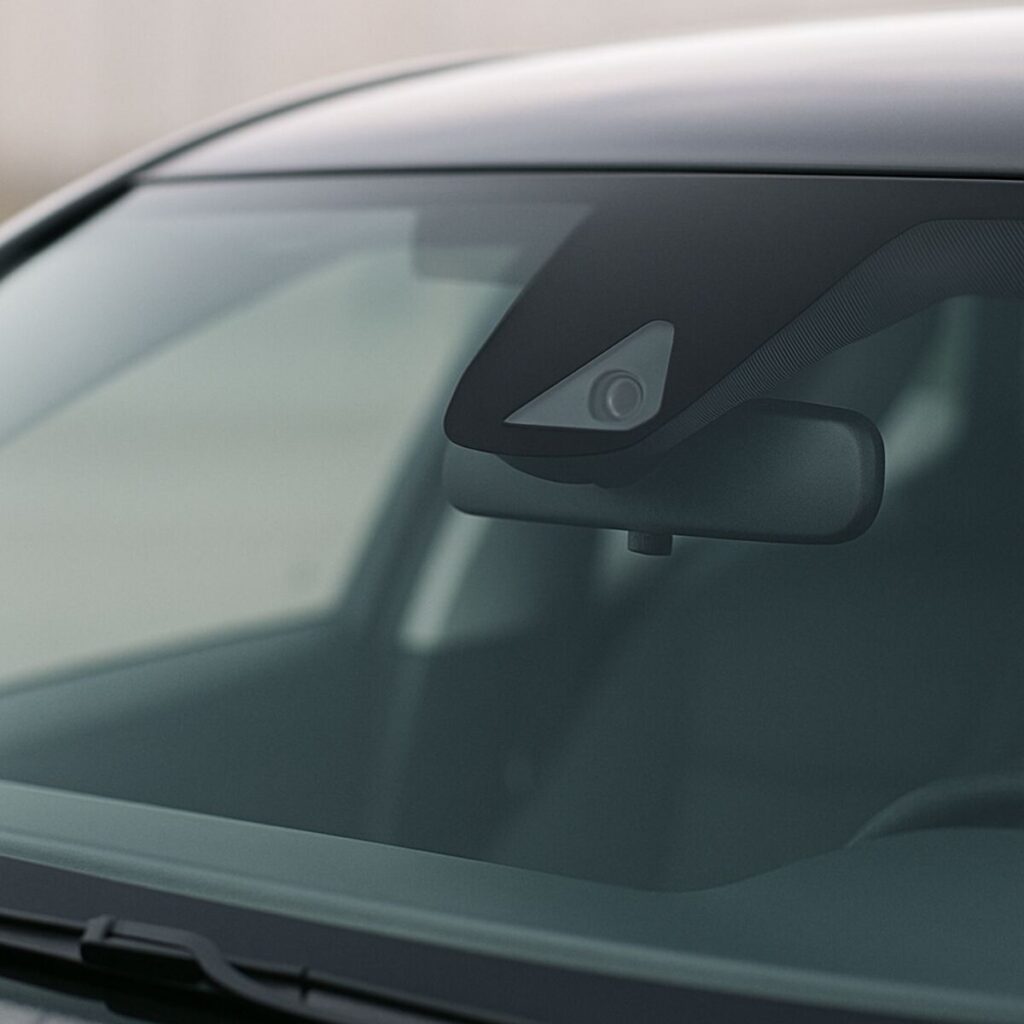
Most modern drivers have experienced the sudden beep of a lane-departure warning or the automatic pulse of emergency braking when traffic stops unexpectedly. These life-saving features are part of a network called Advanced Driver Assistance Systems, or ADAS. While we often think of these systems as invisible computer magic, they actually rely on physical eyes—specifically, a high-definition camera mounted directly behind your rearview mirror. This camera looks exactly where you look, meaning it stares straight through the windshield glass to read the road ahead.
Spotting this technology on your own car is remarkably easy if you know where to look. By stepping out of your vehicle and standing directly in front of the hood, you can inspect the top center of the glass. If you see a small, dark, triangular or trapezoidal cutout in the black border around the rearview mirror, your car is equipped with a forward-facing ADAS camera. This little window gives the sensor an unobstructed view of painted lines, pedestrians, and surrounding vehicles.
Because a new piece of glass will always have microscopic variations in thickness and curvature, the camera’s line of sight gets slightly distorted during vehicle safety sensors and glass replacement. Changing out the windshield completely alters how the vehicle interprets its surroundings, acting much like putting a new prescription lens in front of a human eye. Even a one-millimeter shift in the angle of the glass can translate to the camera misjudging a stopping distance by dozens of feet. To fix this, the camera must be realigned so its digital brain perfectly matches the physical reality of the new windshield.
Without this mandatory realignment step, a helpful safety feature can quickly turn into an active hazard on the highway. Proper ADAS camera calibration after windshield installation ensures that the car doesn’t overreact to optical illusions caused by the fresh glass. Imagine driving down a narrow freeway lane and having your vehicle suddenly jerk the steering wheel to the right because the uncalibrated camera mistakenly thought you were drifting. Ensuring the sensor is perfectly tuned protects you from false alarms and guarantees the automatic braking system kicks in exactly when it should.
The exact method used to fix this digital eyesight depends on your vehicle’s specific make and model. Static calibration happens while the car is parked, using precisely measured targets placed around the vehicle to teach the camera its exact boundaries. Conversely, dynamic calibration requires the technician to plug a computer into your dashboard and physically drive the vehicle at steady speeds on clearly marked roads. Regardless of which method your car requires, a reputable mobile windshield replacement service will have the tools and training to complete this process right in your driveway or on a nearby local road.
Always verify that your chosen technician can handle this specific calibration for your car brand before they begin the job. Once the digital eyes are re-aligned and the dashboard is free of warning lights, you might feel ready to grab your keys and hop on the highway. However, the physical glue holding that heavy pane of glass in place operates on its own strict timeline for maximum structural integrity.
The Curing Process: Why You Can’t Drive Away Immediately
Watching the technician wipe the final smudges off your pristine new glass gives a great sense of relief. The car looks perfectly normal and ready for the morning commute, but looks can be dangerously deceiving. The heavy pane is held in place by an industrial-strength glue, and while the physical installation is visually complete, the chemical bonding phase has just begun. Your technician will give you a specific deadline before you can turn the key, known in the industry as the Safe Drive-Away Time.
The polyurethane sealant curing process relies on drawing moisture out of the surrounding air to harden, much like baking a thick cake where the outside feels firm long before the center is fully baked. Touching the exposed edge might feel completely dry after just fifteen minutes, but the deep internal core of the adhesive remains soft and flexible. Until that chemical reaction finishes, the glue cannot withstand the violent forces of a sudden stop or a collision.
Respecting the safe drive away time after installation is one of the most critical safety decisions you will make as a vehicle owner. For most modern fast-curing urethanes, this hard deadline is typically 60 minutes after the glass is set. During a rollover accident, the windshield acts as a structural pillar that keeps the roof from crushing inward, and it also serves as the backboard that forces the passenger airbag to deploy toward the occupant. If you hit the road before the glue has fully hardened to hold that glass firm, an accident could easily push the windshield right out of the frame.
Beyond simple collisions, everyday actions like shutting your car door can unexpectedly sabotage this newly formed seal. When you forcefully close a door with all the windows rolled up, you instantly increase the air pressure inside the sealed cabin. Because that trapped air needs somewhere to escape, it will push outward against the weakest point, which is currently your soft windshield adhesive. Technicians prevent this dangerous pressure blowout by leaving one window cracked about an inch, a small gap you should maintain for the rest of the day to protect the structural integrity of the seal.
Even after you are cleared to safely drive the vehicle home, the freshly bonded glass still requires gentle treatment over the next day. High-pressure water jets and harsh detergents can easily penetrate the outer edges of the sealant before it reaches its maximum strength, so you must completely avoid automatic car washes for at least 24 hours. Taking a clear look at your options makes a huge difference when deciding whether to pay out of pocket or file an insurance claim.
Navigating the Bill: Windshield Replacement Cost Without Insurance vs. Claims
Staring at a shattered windshield often triggers an immediate mental calculator. You know the car needs to be safe to drive, but the thought of an unexpected repair bill can easily cause more anxiety than the broken glass itself. Most drivers instinctively wonder if they should call their auto insurance provider or simply pay out of pocket to avoid potential premium hikes. The right choice comes down to understanding your specific policy and knowing the true market rate for modern automotive glass.
Before you pull out a credit card, check your policy declarations page for a “deductible waiver” or “Full Glass” coverage. Because an unobstructed windshield is vital for preventing accidents, many states encourage drivers to fix cracks quickly by requiring insurance companies to waive the standard deductible. If you have comprehensive insurance coverage for glass with this specific waiver, your out-of-pocket cost is exactly zero dollars. Even without the waiver, if your standard deductible is lower than the total replacement cost, filing a claim still makes financial sense.
If you carry liability-only coverage or have a massive deductible, you will need to pay for the installation directly. Figuring out your exact windshield replacement cost without insurance depends heavily on the technology hiding behind your rearview mirror. To avoid sudden sticker shock, here are the typical price ranges you can expect:
- Minor Chip Repairs: $50 to $150 (though often completely free through basic insurance).
- Standard Replacements: $250 to $400 for older vehicles without advanced lane-departure cameras.
- Modern Replacements (with ADAS): $700 to $1,500, which includes the mandatory recalibration of your car’s safety sensors.
Navigating this billing process doesn’t mean you have to spend hours on hold with an insurance adjuster. Reputable mobile glass providers actually handle the heavy lifting for you, acting as a direct liaison between your driveway and your insurance carrier. They can verify your policy details, check your exact deductible, and instantly process the claim paperwork on your behalf. Whether you are using full coverage or paying cash, these companies can usually dispatch a technician for same day emergency glass service so your busy schedule barely skips a beat.
Getting the financial details sorted quickly removes the biggest barrier to restoring your vehicle to a safe driving condition. However, a great cash price or a fully covered insurance claim means nothing if the person doing the work cuts dangerous corners. Since the installer is essentially rebuilding a critical safety frame on your car right in your driveway, absolute confidence in their skills and materials is essential.
Spotting a Pro: 5 Questions to Ask Before Choosing a Reputable Mobile Technician
It happens more often than you might think—you are walking out of a grocery store, and a stranger approaches offering a suspiciously cheap cash deal to fix your broken glass right there in the parking lot. While saving a few dollars sounds tempting, these “low-bid” operators often skip crucial safety steps that actually keep your car’s roof from crushing inward during a rollover accident. When you are choosing a reputable mobile technician, you are essentially interviewing someone to rebuild a major safety component of your vehicle. The person doing the work needs to be just as reliable as the car you drive your family in every day.
To separate the true professionals from the corner-cutters, your first questions should always be about their safety credentials and installation materials. Specifically, you want to verify if they carry an AGSC certification, which stands for the Auto Glass Safety Council. This credential means the installer follows strict, standardized rules for safety, including the mandatory use of specialized chemical primers. Think of primer as the essential base coat that allows the heavy-duty industrial glue to permanently bond the glass to the metal frame. If an amateur skips this vital step while fixing a cracked windshield at home in your driveway, that glass could simply pop out during a collision, putting everyone inside at severe risk.
Beyond crash safety, everyday driving comfort is the next critical thing to verify with a prospective installer. Always ask if they provide a written Lifetime Leak Warranty that protects you against both water intrusion and wind noise for as long as you own the vehicle. A poorly sealed windshield might look perfectly fine from the outside, but the first heavy rainstorm can send water dripping directly into your dashboard’s expensive electronics. Even a microscopic gap in the adhesive seal can create a maddening, high-pitched whistling sound when you hit highway speeds, so getting a permanent guarantee against these annoying flaws is non-negotiable.
Technical proficiency is just as crucial, especially since a modern mobile windshield replacement involves advanced vehicle computers. You must ask the provider if they are fully equipped to handle the safety sensors and cameras mounted just behind your rearview mirror. These systems act as your car’s “eyes” for features like automatic emergency braking and lane-keeping assistance. A true professional will know exactly how to safely disconnect these sensors, install the fresh glass, and properly realign the cameras right there in your driveway so the vehicle continues to see the road perfectly.
Taking five minutes on the phone to ask these direct questions transforms a stressful repair into a completely smooth, safe experience. Once you have verified their safety credentials, secured your leak warranty, and confirmed their technical expertise, you can confidently hand over your keys. However, the mobile technician’s job is only the first half of a successful repair. Proper care immediately after they pack up their van ensures the seal cures correctly.
Your Post-Install Checklist: Protecting Your Investment for the First 24 Hours
A new windshield is far more than a giant piece of glass—it is a vital safety shield that supports your car’s structural frame. By choosing a mobile service, you avoided a disrupted Saturday in a repair shop waiting room, letting the technician bring the surgical suite directly to your driveway. But while the heavy lifting is done, your crucial role in this repair is just beginning.
Even after the technician hands back your keys, the underlying work is still happening. The polyurethane sealant curing process remains active behind the scenes, hardening to form that crash-safe, waterproof bond. How you treat your vehicle over the next day is the single most critical factor in guaranteeing the long-term life and safety of your new glass.
To protect that fresh seal and ensure your mobile windshield replacement sets perfectly, follow this simple 24-hour action plan:
- Leave a window cracked: Keep one window down about an inch to prevent cabin air pressure from popping the fresh seal when you slam your car doors.
- Skip the car wash: Avoid high-pressure sprays or automatic car washes entirely; the intense water pressure and harsh chemicals can easily wash away or disrupt the curing adhesive.
- Drive gently: Steer clear of severe potholes, aggressive speed bumps, and rough dirt roads that could shake the heavy glass out of its precise alignment.
- Listen for whistling: Pay close attention during your first highway trip, using your ears to verify the seal is airtight.
If you do hear a faint, high-pitched wind noise filtering through the cabin on that first drive, do not ignore it. While mobile technicians meticulously prep the vehicle’s frame to ensure a perfect fit, a whistling sound is the primary indicator that air is finding a microscopic pathway through the urethane. Simply call your service provider, as reputable installers will gladly correct a seal issue right away.
Respecting the safe drive away time after installation is your first big win, but maintaining these gentle habits for a full day solidifies that success. The next time you slide into the driver’s seat, notice how crystal clear the road looks without that stressful crack splitting your view. Turn the key, ease out of your driveway, and enjoy the ride with absolute peace of mind.
