


You’ve seen the glossy ads promising a lucrative business you can run entirely from your laptop, but what actually happens the exact second a customer hits the “Purchase” button? The biggest fear for most new store owners isn’t finding great products to sell; rather, it’s the sudden, panic-inducing “what now?” moment when that very first notification chimes. Dropshipping order management acts as the invisible bridge connecting a buyer’s payment on your website to a physical package arriving on their doorstep. Without a solid system, the magical feeling of making a sale can quickly dissolve into a logistical nightmare. Choose the best dropshipping order management.
Think of this entire lifecycle like a high-speed relay race where the baton is the buyer’s shipping information. Once the shopper completes their checkout, they hand the baton to you. Your job is to seamlessly pass that exact same ticket—containing the item details and delivery address—directly to your supplier, so they know exactly what to pack. Common knowledge in e-commerce dictates that this information relay must happen flawlessly, because the supplier cannot ship a phone case or a yoga mat if they don’t know where it is supposed to go.
Unfortunately, this handoff is precisely where things tend to go off the rails. In practice, manual data entry is a minefield for costly human errors that can ruin a customer’s experience. Imagine a scenario where a buyer accidentally enters the wrong zip code, or you copy and paste a street name with a slight typo while working at two in the morning. These tiny slips mean the product gets lost in transit, leaving you to deal with an angry shopper and a frustrating dent in your daily profits.
Managing these details by hand might take just a few minutes when you are only processing one or two purchases a day, but what happens when your store starts gaining real traction? Industry data reveals that successful merchants can easily spend hours bogged down in tedious copy-pasting if they refuse to adapt their workflows. True supply chain management in this business isn’t about owning giant warehouses or driving forklifts; it is about establishing a daily routine that keeps your time commitment to a strict minimum while ensuring absolute accuracy.
Securing that peace of mind ultimately comes down to letting technology do the heavy lifting for you. Finding a reliable virtual assistant in the form of an app transforms chaotic administrative tasks into a smooth, automated flow. Focusing your energy on growing your brand is much easier when you know the mechanics of order routing are humming along safely in the background. The right systems provide this emotional relief and keep your storefront running like a well-oiled machine.
Why Your Store Needs a ‘Mirror’: The Critical Role of Real-Time Inventory Sync
You’ve just finished setting up your store, but a hidden trap awaits if your website isn’t talking directly to your supplier. Imagine a customer buying a highly demanded yoga mat, only to discover days later that the supplier actually ran out of them last week. You just sold a “ghost product”—an item that looks available on your storefront but doesn’t physically exist on the supplier’s shelf. To avoid this frustrating scenario, your store needs to act as a perfect reflection of your supplier’s stockroom, a continuous process called inventory mirroring.
Setting up multi-channel inventory synchronization solves this by automatically checking the supplier’s shelves for you behind the scenes. Instead of wasting two hours of manual checking daily, simple dropshipping apps can automate stock level updates every 15 minutes to keep everything perfectly aligned. Without this digital connection, preventing out of stock issues becomes a risky guessing game. Here are three signs your current inventory system is about to fail:
- Mismatched quantities between what your website says and what the supplier actually holds.
- Delayed supplier updates that force you to awkwardly cancel orders days after payment.
- Sudden spikes in sales for products you haven’t recently verified are in stock.
Maintaining that accurate digital reflection protects your brand’s reputation and keeps customer refunds to an absolute minimum. Once your store’s numbers automatically match your supplier’s reality, you can stop stressing over stock counts and focus on actually processing the purchases.
The Virtual Assistant in Your Laptop: Moving from Manual to Automated Fulfillment
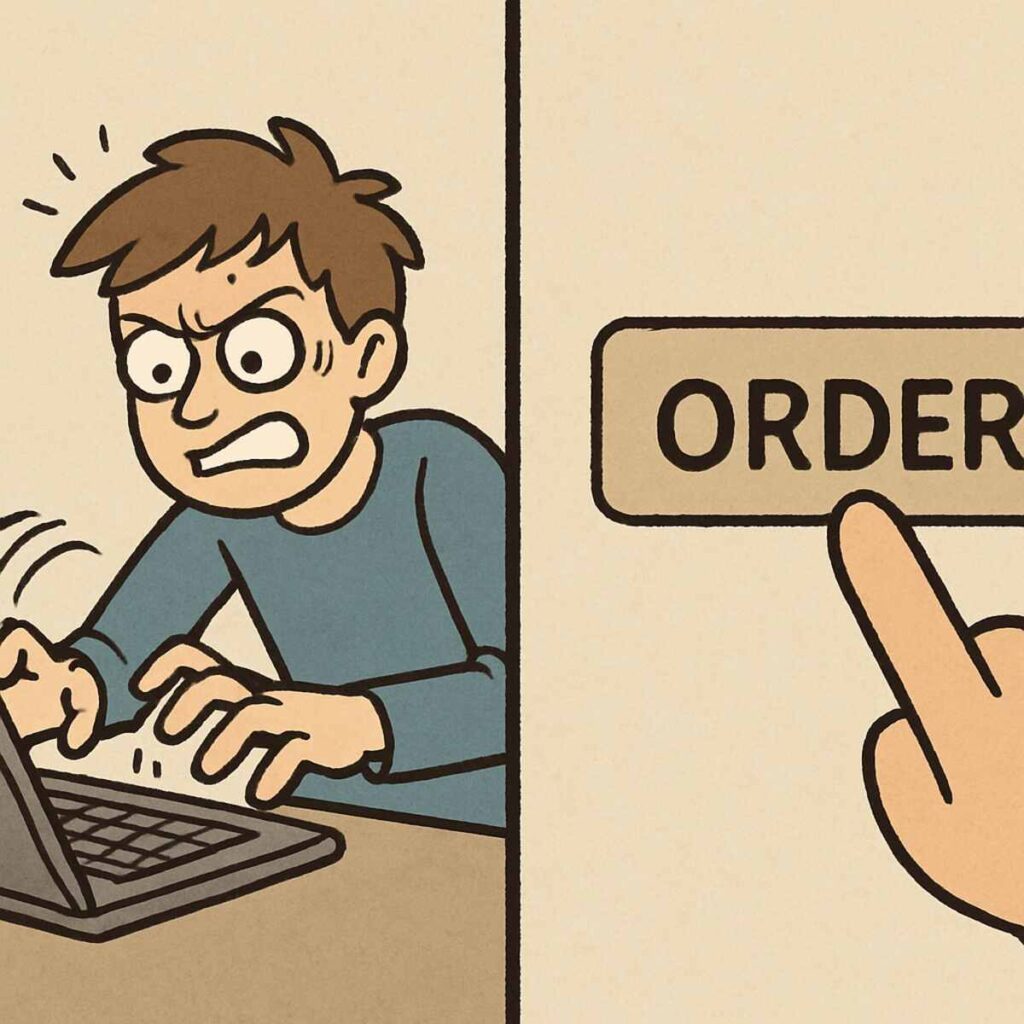
Getting your first sale is thrilling, but copying and pasting customer addresses into your supplier’s website quickly loses its charm. While single orders seem manageable, in the battle of manual vs automated order processing, manual entry inevitably becomes a bottleneck. A single typo can accidentally send a profitable order to the wrong state entirely. To scale without constant anxiety, you need a system that handles the repetitive busywork.
Think of an automated fulfillment workflow as a virtual assistant that instantly hands your customer’s delivery details to the warehouse. Instead of typing frantically, these tools use a digital bridge—commonly called an API—that securely transmits exact shipping data behind the scenes. When you wake up to a sudden spike in sales, you simply review your dashboard and execute a “1-Click fulfillment” to process all 50 orders simultaneously. The software perfectly mirrors the data every single time, completely eliminating those costly shipping address typos.
For most sellers, the best ecommerce fulfillment apps offer an undeniable return on investment. Spending $20 a month for an automation tool easily outweighs sacrificing 20 hours of your own labor acting as a human copy-paste machine. Once this digital assistant passes the baton, the supplier finally packs the box.
The Tracking Number Relay: Keeping Customers Calm with Automated Updates
Nothing spikes a buyer’s anxiety faster than silence after their credit card is charged. As a consumer, you expect instant updates, but as a store owner, you might dread the inevitable “Where is my package?” emails. This tracking number relay is your best defense against an overflowing support inbox. Once your supplier boxes up that yoga mat or phone case, they generate a tracking ID, which acts as the final baton pass in your fulfillment race. Handing that baton to your customer immediately reassures them their purchase is safe and on the move.
Manually messaging each buyer with shipping details is an exhausting chore you can easily avoid. Fortunately, the same automated software that sent the initial address to the warehouse works in reverse to handle your order tracking. The second a supplier scans a package out their door, your system grabs that tracking ID and instantly emails the shopper. This seamless loop provides customers with real-time tracking number updates while you are asleep, at your day job, or focusing on finding new products.
Setting up this automated confirmation properly saves you hours of answering frantic messages. To eliminate confusion entirely, ensure your system’s dispatch email always includes three key elements:
- A direct, clickable tracking link so they don’t have to copy and paste long numbers.
- A realistic estimated delivery window based on the shipping method.
- Your dedicated customer support email address just in case they need help.
With your shopper happily watching their package travel, you are free to step back and look at the bigger picture.
Managing the ‘Kitchen’: Handling Multiple Supplier Relationships via One Dashboard
Imagine running a restaurant where your appetizers come from a kitchen in New York and your desserts are cooked in California. In e-commerce, this exact scenario happens the moment a customer buys a phone case from your first vendor and a charging cable from your second. Suddenly, a single purchase contains items that need to be fulfilled by entirely different warehouses. Trying to manually separate and assign these requests can quickly become an overwhelming puzzle as your daily sales increase.
A much easier approach involves using dropshipping software that acts as a single, unified control room. Instead of logging into five different vendor websites to place your orders, you use a centralized dashboard for sales data and daily fulfillment. This main screen standardizes all the incoming information, meaning every customer purchase looks exactly the same to you, regardless of which external company is actually holding the physical inventory.
Behind the scenes, this software utilizes a feature called supplier routing to do the heavy lifting. When that mixed order arrives, the system acts like a smart waiter by automatically splitting the digital ticket, sending the phone case details to the first warehouse and the cable request to the second. Effectively managing multiple supplier relationships becomes completely manageable when your software handles all the chaotic data sorting for you in real-time.
Once these automated systems are humming along, your digital kitchens will consistently deliver the right products to the right doorsteps. However, even the most reliable suppliers occasionally pack the wrong color or ship a defective item.
The ‘Uh-Oh’ Protocol: Mastering Dropshipping Returns and Refunds
The biggest fear for new dropshippers isn’t finding products—it’s figuring out how to handle dropshipping returns without a physical warehouse. When a buyer receives a cracked phone case, you enter “reverse logistics,” which is simply the industry term for moving a product backward from the customer to the supplier. To protect your margins, build your store’s return policy around a “replacement-only” agreement. Instead of paying expensive international shipping fees to mail a cheap item back, negotiate with your vendor to simply ship a new product whenever they are provided photo proof of damage.
If the vendor does require the physical item back, you will need a Return Merchandise Authorization (RMA). This is a special reference number from the supplier that tells their warehouse exactly who the returning package belongs to. Managing this middleman process requires a tight 3-step “Refund Recovery” workflow:
- Verify: Ask the buyer for a clear photo of the defect.
- Contact: Forward this evidence to the supplier to secure the RMA or a free replacement.
- Update: Pass the RMA instructions or new tracking details to your buyer.
Proactive customer communication during delays or return windows is crucial here, as keeping buyers informed prevents frustrated credit card chargebacks.
Mastering this delicate dance keeps buyers happy without turning your living room into a return center. Clear policies transform inevitable mistakes into displays of excellent service. However, if you constantly apologize for broken items or painfully slow replacements, the problem might be your vendor.
Verifying the ‘Need for Speed’: How to Audit Supplier Shipping Performance
You have promised a yoga mat to a buyer in five days, but three days later, the vendor hasn’t even printed the shipping label. This stressful scenario happens when store owners confuse a supplier’s transit time with their lead time. Think of lead time—often called processing lag—as the time it takes a restaurant kitchen to cook your meal, while transit time is the delivery drive to your house. Successfully verifying supplier shipping speeds requires measuring this entire timeline together, starting the exact second a customer’s payment clears.
To stop invisible delays from hurting your brand, rely on hard data rather than a vendor’s optimistic promises. Modern order management software acts as your virtual watchtower, automatically monitoring tracking numbers across all your sales to calculate true average delivery times. If the dashboard reveals a partner consistently takes a full week just to box up a phone case, you can quickly weed them out of your supply chain. Spotting these slow movers early is your best strategy for reducing shipping delays for customers.
Replacing a sluggish vendor before they trigger a wave of refund requests protects your store’s hard-earned reputation. Once you secure a roster of fast-acting suppliers, you can confidently advertise delivery estimates that build lasting trust with your buyers.
Crossing Borders: Navigating International Shipping Without Logistics Training
Sending a phone case to the next town is easy, but moving it across an ocean changes the game. When handling international shipping logistics, your package must pass through customs clearance—think of this as a border tollbooth where inspectors check the contents and collect taxes. If the supplier forgets the paperwork, the package sits gathering dust. To avoid this, new sellers should target countries with reliable postal systems and avoid high-risk nations known for losing packages or delaying border checks.
Protecting your customer’s experience means doing a little homework before opening your checkout page to a global audience. Before shipping to a new country, always verify these four details:
- Tax rules: Select shipping lines that pre-pay customs fees so buyers aren’t surprised by an unexpected bill at their door.
- Restricted items: Ensure your specific product is legally allowed across their borders.
- Average cost: Confirm the international shipping rate won’t eat your entire profit.
- Tracking availability: Ensure tracking updates continue after handoff to the last-mile delivery partner—the local mail carrier, like the USPS or Royal Mail, that actually drops the box on the porch.
Mastering this part of supply chain management comes down to setting realistic delivery windows for different continents. If a package takes three weeks to reach Europe, state that clearly so the buyer feels informed rather than ignored. Building transparency keeps international buyers happy, but absorbing those fluctuating overseas shipping costs can quickly drain your bank account.
The Math of Success: Real-Time Profit Margin Calculation for Every Order
Making a sale feels like a victory until you realize the money hitting your bank account doesn’t match your website’s price. This introduces the contribution margin—the actual cash left after subtracting the direct costs of fulfilling one specific item. If you sell a yoga mat for $40, but the supplier charges $15 and shipping is $10, your contribution margin is $15. That remaining cash must cover advertising, making accurate profit margin calculation for orders the difference between running a real business and funding a hobby.
Illustration: A simple bar chart showing ‘Product Cost’, ‘Ad Spend’, and ‘Fees’ being subtracted from ‘Sale Price’ to leave ‘Profit’.
Relying on mental math works initially, but scaling backend operations for growth requires software to catch a silent killer known as transaction drag. This term describes the tiny, hidden fees attached to purchases, like credit card processing charges or currency conversions that slowly drain your revenue. Instead of updating spreadsheets at midnight, dropshippers link profit-tracking apps to their stores to automatically deduct these costs. Letting software monitor your data instantly reveals if a popular product is secretly losing money.
Catching financial leaks early protects you when suppliers suddenly raise their base prices without warning. A real-time dashboard alerts you the moment net profit dips, allowing you to adjust retail prices immediately rather than discovering the loss weeks later. Securing your bottom line through automated math ensures every sale actually builds wealth.
Your Scaling Roadmap: Moving from 1 Order a Day to 100
You now understand the mechanics of the invisible bridge connecting your customer’s checkout cart to the package arriving on their doorstep. More importantly, you know exactly how to avoid the late-night data entry traps that burn out so many new sellers. You are equipped to stop acting like a manual operator and build a resilient infrastructure.
The real secret to scaling backend operations for growth isn’t working longer hours; it is stepping out of the way. When you rely on automated systems to pass the baton to your suppliers, you buy back your most valuable asset: time. Instead of frantically copying and pasting shipping addresses into supplier websites, you can channel your energy into marketing, finding winning products, and creating an amazing experience for your buyers.
To build a backend that handles growth automatically, you need a structured rollout plan. Trying to install and configure every app on day one usually leads to frustration and broken connections. Instead, treat your store readiness like a marathon rather than a sprint, taking a steady, step-by-step approach to implementing your dropshipping order management tools.
Follow this 30-day tool implementation checklist to safely build your automated operations:
- Week 1: Inventory Syncing. Install your core app and connect your supplier’s catalog to your store. Make sure the software is set to automatically update stock levels so you never sell a “ghost” product.
- Week 2: Order Fulfillment. Configure your software’s ordering rules. Set up your virtual assistant to automatically send customer names and addresses to your supplier the moment payment clears.
- Week 3: Customer Communication. Turn on automated tracking notifications. Ensure your system instantly emails the customer their tracking link as soon as the supplier creates the shipping label.
- Week 4: The Practice Run. Place a test order on your own store using a real credit card. Watch the automated flow in real-time to guarantee every step works perfectly before launching to the public.
Start with that first test order to verify the workflow. Once the software reliably handles the logistics, you can focus on bringing in real customers with complete peace of mind. Automated notifications and seamlessly fulfilled packages build operational stability, proving that managing an e-commerce business at scale is entirely within your reach.
