


You go to plug in the toaster, and suddenly the kitchen goes dark. It’s not just an inconvenience; it’s a puzzle you shouldn’t try to solve with a YouTube video. Resetting a tripped circuit breaker might restore power temporarily, but ignoring why that system failed in the first place is a gamble with your home’s safety. Select the best electrical panel upgrade Highlands Ranch.
According to the National Fire Protection Association, electrical malfunctions cause over 50,000 home fires annually. Recognizing the difference between a harmless power surge and a true danger sign is vital for any renter or homeowner. Pay close attention to physical warnings like a faint buzzing sound behind the drywall or a scorching indicator, which looks like a yellow or brown burn mark around the plastic outlet cover.
Searching for an “electrician near me” becomes your best move the moment you notice these visual red flags or feel heat radiating from a wall switch. Bringing in a qualified emergency electrician ensures that hidden electrical faults are properly diagnosed before they melt the wiring behind your walls.
Beyond just fixing the immediate short circuit, a seasoned local electrician provides an invisible layer of protection through local code compliance. Every municipality has specific building regulations designed to prevent fires and ensure system stability. Because out-of-town contractors might overlook these exact regional standards, relying on a neighborhood professional guarantees your upgrades are both legally sound and structurally safe.
Master vs. Journeyman: Decoding Your Electrician’s Qualifications
You already know hiring a licensed pro keeps your home safe, but did you know not all licenses are equal? Verifying electrical contractor license levels isn’t just about getting a good repair. It ensures your homeowner’s insurance actually covers the work if a wire ever faults.
The hierarchy of master electrician versus journeyman qualifications breaks down into a simple structure based on thousands of hours of hands-on experience:
- Apprentice: The trainee. They handle basic wiring tasks but must work under direct, constant supervision.
- Journeyman: The independent worker. After roughly 8,000 hours of training, they can legally troubleshoot flickering lights or install a new GFCI outlet (the safety outlets near water) on their own.
- Master: The system designer. They have passed advanced exams to oversee major projects, design circuits, and pull necessary city permits.
Most standard household repairs only require a skilled Journeyman to get your power flowing safely again. However, if you are upgrading your main breaker box to support a new electric vehicle charger, local codes often require a Master’s signature on the permit. Knowing exactly who you need helps you budget properly.
The Real Cost of Hiring a Licensed Electrician Per Hour
Getting the bill for a seemingly quick repair often causes immediate sticker shock. When evaluating the average cost to hire a licensed electrician per hour, you might wonder why the rate feels so high just for replacing a bad wall switch. You are actually paying for a crucial safety net of overhead costs, not just the physical time spent holding a screwdriver. Reputable pros factor in expensive liability insurance, ongoing safety training, and specialized testing tools to guarantee your home never becomes a hidden fire hazard.
Dispatch fees add another common layer of confusion to your initial quote. Even a nearby local electrician must cover the physical expense of bringing a fully stocked, heavy work van directly to your driveway. Recognizing that legitimate contractors separate these travel expenses from their hourly labor rate helps you dodge dangerously under-quoted projects. A handyman offering prices that seem impossibly cheap is almost certainly cutting corners on essential city permits or minimum safety standards to make that low price work.
A transparent price ultimately buys you complete peace of mind. Once you know how to spot fair market rates, you can confidently budget for larger problems that keep interrupting your daily routine. If your current electrical box constantly struggles to run modern appliances simultaneously, a basic service call will not solve the underlying issue.
Is Your Home Underpowered? Understanding the ‘Highway’ Analogy for Panel Upgrades
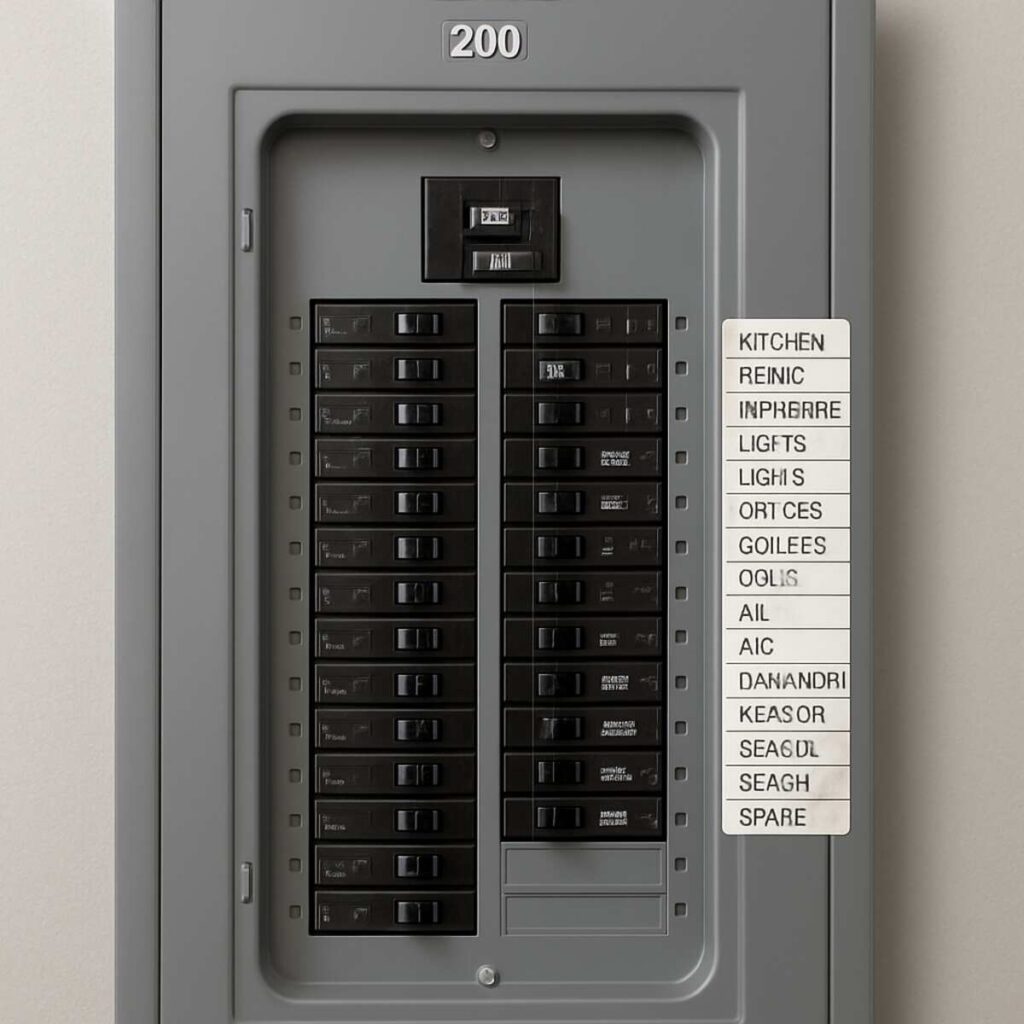
Your electrical panel is essentially a highway managing the flow of power into your home. When you plug in a heavy-duty appliance or install a new EV charger, you are adding massive trucks to this road. If your property relies on a lower amperage capacity, like an older 100-amp service, there simply aren’t enough lanes to handle the traffic. This congestion results in a jam that trips your safety switches, meaning an upgrade is necessary to add more lanes and keep modern technology running smoothly without overheating.
Beyond just total capacity, the physical age of your equipment poses significant hidden risks. Inside the metal box are panel bus bars, which are the thick metal strips that distribute electricity to individual circuits. In houses built decades ago, these bars can deteriorate or belong to defunct, outdated panel brands now known for causing serious fire hazards. If you are finally upgrading old fuse box to breaker panel technology, replacing these obsolete components is a non-negotiable safety requirement.
Waiting for a complete power failure is an expensive gamble you should avoid. You can easily spot the physical signs your circuit breaker needs replacement long before you are left in the dark. Look out for breakers that feel hot to the touch, rust developing around the metal casing, or a faint buzzing sound coming from the box.
Taking proactive steps today prevents an emergency call during a busy holiday weekend. By assessing your current energy demands and scheduling an upgrade now, your property will be safely prepared for future renovations. However, not every power issue originates at the main box.
The Mystery of the Flickering Light: Common Residential Wiring Issues
You swap out a dead bulb, but the new one immediately starts dimming every time the AC kicks on. This frustrating symptom is often your first clue when troubleshooting common home wiring issues. When heavy appliances gulp electricity to start, they cause a temporary “voltage drop” (a sudden dip in available power). While minor dimming is normal, constant strobing means your electrical system is struggling to balance the load.
To determine if you need a professional for fixing flickering lights throughout your house, use this quick diagnostic checklist:
- Scale the issue: Is the flickering contained to one specific lamp, or does it happen across multiple rooms?
- Test the base: A poorly screwed-in bulb easily mimics major faults, so always check the physical connection first.
- Identify triggers: Does the strobing only occur when the microwave or vacuum runs?
- Track LED lifespan: Burning through expensive bulbs in just a few months is a major systemic red flag.
Stopping premature LED failure often comes down to finding a loose “neutral wire” (the necessary path returning electricity to your panel). When connections loosen, electricity actually jumps the physical gap, creating microscopic, dangerous sparks called “arcing.” Catching these hidden arcs early prevents unseen wall fires. Just like lighting gives you warning signs, your wet rooms have built-in defenses.
GFCI Outlets: The Life-Saving ‘Safety Buttons’ Near Your Sinks
You have likely noticed those little rectangular buttons on the outlets near your kitchen and bathroom sinks. These are GFCI outlets (Ground Fault Circuit Interrupters), acting as hyper-sensitive scales that measure electricity flowing to your hair dryer. If current “leaks” outside the intended path into nearby water, creating what is known as a “ground fault,” the device detects it in milliseconds and instantly cuts the power to prevent severe shocks.
Maintaining this critical protection requires a simple 10-second monthly habit: the “Push-to-Test” method. Press the “Test” button to verify the power stops, then hit “Reset” to restore it. If the button stubbornly refuses to stay pushed in, the internal sensor is dead or a hidden wiring danger remains. Considering the very reasonable average price for outlet and switch replacement, ignoring a broken button is never worth the risk to your family.
Older homes often lack these modern safeguards entirely. Finding unprotected wet areas highlights the broader benefits of a professional electrical safety inspection to ensure your whole house meets safety compliance standards. Once your interior water zones are safely secured, you might start thinking about heavier power needs.
EV Charger Installation: Preparing Your Garage for the Future
Plugging an electric car into a standard outlet is like filling a pool with a garden hose. To charge overnight, you need Level 2 Charging (a faster system using the same 240-volt power as your clothes dryer). Because EVs draw continuous power for hours, they need a dedicated circuit (a private electrical lane from your panel directly to the charger). DIY installation here is a severe fire hazard, as standard wires will quickly overheat and melt under this immense stress.
Before proceeding, a professional must verify if your current electrical panel can safely handle this heavy 40 to 50-amp load. The essential equipment needed for a Level 2 home charging station includes:
- A charging unit (choose between a permanently hardwired station or a flexible plug-in model).
- Heavy-duty wiring rated for continuous, high-heat loads.
- A properly sized breaker installed inside your main panel.
Searching for a reputable licensed electrician guarantees your charger is installed safely while meeting strict local electrical code compliance for renovations. A licensed pro prevents electrical fires, pulls the necessary permits, and ensures your car is always ready for the morning commute. Once your garage is safely equipped with modern power, you can confidently upgrade your home’s indoor efficiency.
Smart Home Lighting: How to Modernize Without Overloading Your System
You bring home a sleek smart switch, ready to control lights via your phone, only to find a confusing mess behind the wallplate. Most older houses lack a neutral wire (a white wire that completes an electrical circuit), which modern switches require to operate. Choosing the right hardware for your home’s age is a critical first step, as forcing new tech onto outdated wiring is a serious fire hazard.
Have you ever noticed new dimmable LED bulbs flickering or buzzing? This happens because smart switches constantly pull a tiny amount of power to stay online, a phenomenon known as a ghost draw (continuous standby power). If your hardware isn’t perfectly compatible, this energy trickle causes visual flickering, while poor switch placement disrupts the stable Wi-Fi connectivity these devices demand.
Navigating these hidden hurdles is why hiring a licensed local electrician saves you from endless troubleshooting and expensive mistakes. A professional easily identifies wire compatibility, safely manages background power loads, and ensures your system operates flawlessly. While upgrading a living room takes specific residential care, tackling larger-scale building projects involves completely different electrical requirements.
The Difference Between Residential and Commercial Electrical Needs
Opening a new bakery or setting up a small office sounds exciting until you plug in a commercial espresso machine and the breaker trips immediately. The main difference between home and business wiring comes down to capacity. Most homes run on standard power, but commercial buildings usually require three-phase power (a heavy-duty electrical supply delivering three continuous currents instead of one). Think of it like upgrading from a quiet two-lane road to a massive six-lane highway to handle heavy appliance traffic without overheating the system.
If you are reviewing bids for a shop build-out, you might wonder why commercial quotes are significantly higher than home renovations. The answer lies in strict building codes and the materials required to keep high-traffic public spaces safe:
- Residential Romex: Home wires are typically bundled in flexible plastic sheathing (Romex) and hidden safely behind drywall.
- Commercial Conduit: Business wiring must be pulled through rigid metal tubes (conduit) to protect against physical damage and dangerous fire hazards.
Recognizing these structural differences ensures you hire the correct specialist to keep your building up to code. When searching for a local electrician, always verify their specific experience in residential vs commercial electrical services. However, whether you are running a household or a busy storefront, sudden power losses or burning smells require immediate professional action.
When to Call the 24/7 Emergency Electrician
You smell a faint fishy odor near an outlet, or hear sizzling behind the living room wall. These are not minor inconveniences that can wait until Monday; they require immediate 24/7 emergency electrical repairs to prevent a house fire. While a single flickering bulb is a simple fix, burning smells, sparking outlets, or a breaker that instantly trips again after resetting are non-negotiable red flags. When professionals arrive, they often use thermal scanning (a specialized camera that “sees” hidden heat) to precisely pinpoint melting wires without unnecessarily tearing open your drywall.
Knowing the location of your breaker box is just the first step during a crisis; you must also understand how to safely use the main disconnect. This large switch, usually located at the very top of your panel, controls the electricity for your entire home. If an outlet starts smoking or you experience a dangerous surge, flipping this master switch to “Off” acts as your ultimate safety valve by cutting the total power immediately. Shutting this down stops the immediate hazard while professional help is on the way.
Following a major storm or a severe home power surge, scheduling a professional safety check is vital even if the lights come back on. A rapid emergency response time for power failures minimizes the risk of hidden, smoldering damage turning into a disaster. Yet, inviting a stranger into your home during a stressful crisis means you must rigorously verify their qualifications.
How to Verify an Electrical Contractor License in 5 Minutes
Turning your home’s safety over to a cheap handyman can transform a flickering light into a massive financial liability. Verifying electrical contractor license credentials protects you from dangerous amateur work. A general business permit simply means they pay local taxes, whereas a true state electrical license guarantees specialized safety training. Reputable pros are also always “bonded and insured.” Insurance covers property accidents, while a bond acts as a financial guarantee that your job gets finished if the company suddenly folds. Always request a COI (Certificate of Insurance), a single document proving these policies are currently active.
Make sure your list of questions to ask before hiring an electrician demands hard proof rather than verbal promises. Use this simple vetting checklist:
- Request their specific state electrical license number.
- Search that exact number on your state’s official licensing portal.
- Ask for a digital copy of their current COI.
- Verify the policy explicitly covers electrical labor, not just general maintenance.
- Confirm the written estimate clearly details their bonded guarantees.
With your professional successfully vetted, you can immediately implement a proactive safety plan.
Your Home Safety Action Plan
You no longer have to view a flickering light or a tripped breaker as an unsolvable mystery. Because your electrical panel acts as a busy highway and your breakers serve as crucial safety valves, you can easily spot when your system is overwhelmed. Recognizing these warning signs early empowers you to take control of your home safety compliance before a minor electrical traffic jam becomes a dangerous hazard.
Protecting your home means shifting from reactive panic to proactive care. While resetting a tripped breaker is a simple fix, unlocking the full benefits of a professional electrical safety inspection ensures long-term electrical reliability. A qualified expert can spot hidden vulnerabilities—like outdated wiring or overloaded circuits—long before you ever smell burning plastic or experience a costly power outage.
To keep your home’s power running smoothly between professional visits, start following this simple annual electrical maintenance checklist for homeowners:
- Press the “Test” and “Reset” buttons on all GFCI outlets near sinks and bathrooms monthly.
- Check that your frequently used light switches always feel cool to the touch.
- Flip your main breaker off and on once a year to keep the mechanical parts from sticking.
Vet a reliable, licensed local electrician today, rather than waiting for a midnight emergency, and put their contact information right on your fridge. By combining proactive safety habits with a trusted professional on standby, you secure lasting peace of mind every time you plug in an appliance or flip a switch.
